






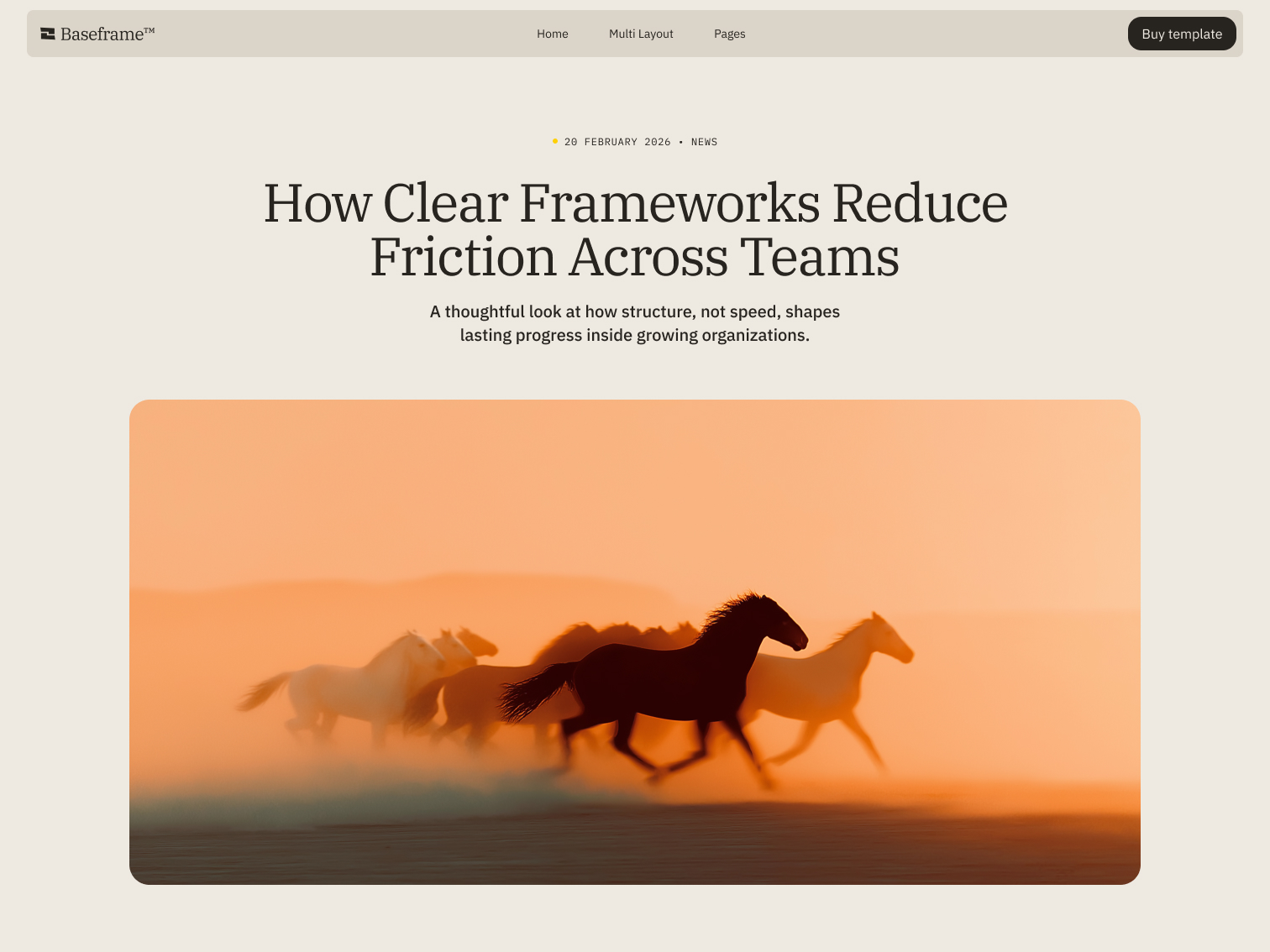





How Clear Frameworks Reduce Friction Across Teams
A thoughtful look at how structure, not speed, shapes lasting progress inside growing organizations.

Why structure quietly determines how far a business can go and what happens without clarity and vision.
Most organizations don’t struggle because they lack ideas. In fact, the opposite is usually true. Ideas tend to accumulate faster than the structures meant to support them. New initiatives appear, priorities shift, teams grow, and suddenly what once felt intuitive becomes difficult to explain.
This is rarely noticed at first. Things still move forward. Work still gets done. But gradually, decision-making slows, alignment requires more effort, and communication starts to feel heavier than it should. The problem isn’t ambition. It’s structure.
When nothing is clear...
A common pattern emerges as organizations grow. Each new idea arrives with good intentions. Each new layer solves a real problem in the moment. Over time, however, these layers begin to compete rather than support one another. Meetings expand. Messages multiply. Decisions require more explanation. What’s missing isn’t effort or intelligence, but a shared frame that helps people understand how things connect.
Without structure, clarity becomes fragile. It depends on individuals rather than systems. When the people who “just know how things work” step away, confusion quickly fills the gap.

When priorities are clearly framed, teams spend less time debating direction and more time moving forward. When roles and responsibilities are visible, accountability feels natural instead of forced. When communication follows a consistent structure, messages travel further with less distortion. Structure isn’t about documentation for its own sake. It’s about making decisions easier to make and easier to explain.
Why clarity compounds over time
One of the most underestimated aspects of structure is how its impact compounds. Small improvements in clarity create better decisions. Better decisions create stronger outcomes. Stronger outcomes reinforce trust in the system.
Over time, this creates momentum. Teams don’t need constant alignment because the structure does part of that work for them. Strategy stops feeling like a separate activity and starts showing up in everyday decisions.
This is why structure matters most during growth. It’s easier to add new ideas than to revisit foundations. But without a solid frame, growth amplifies existing weaknesses.