



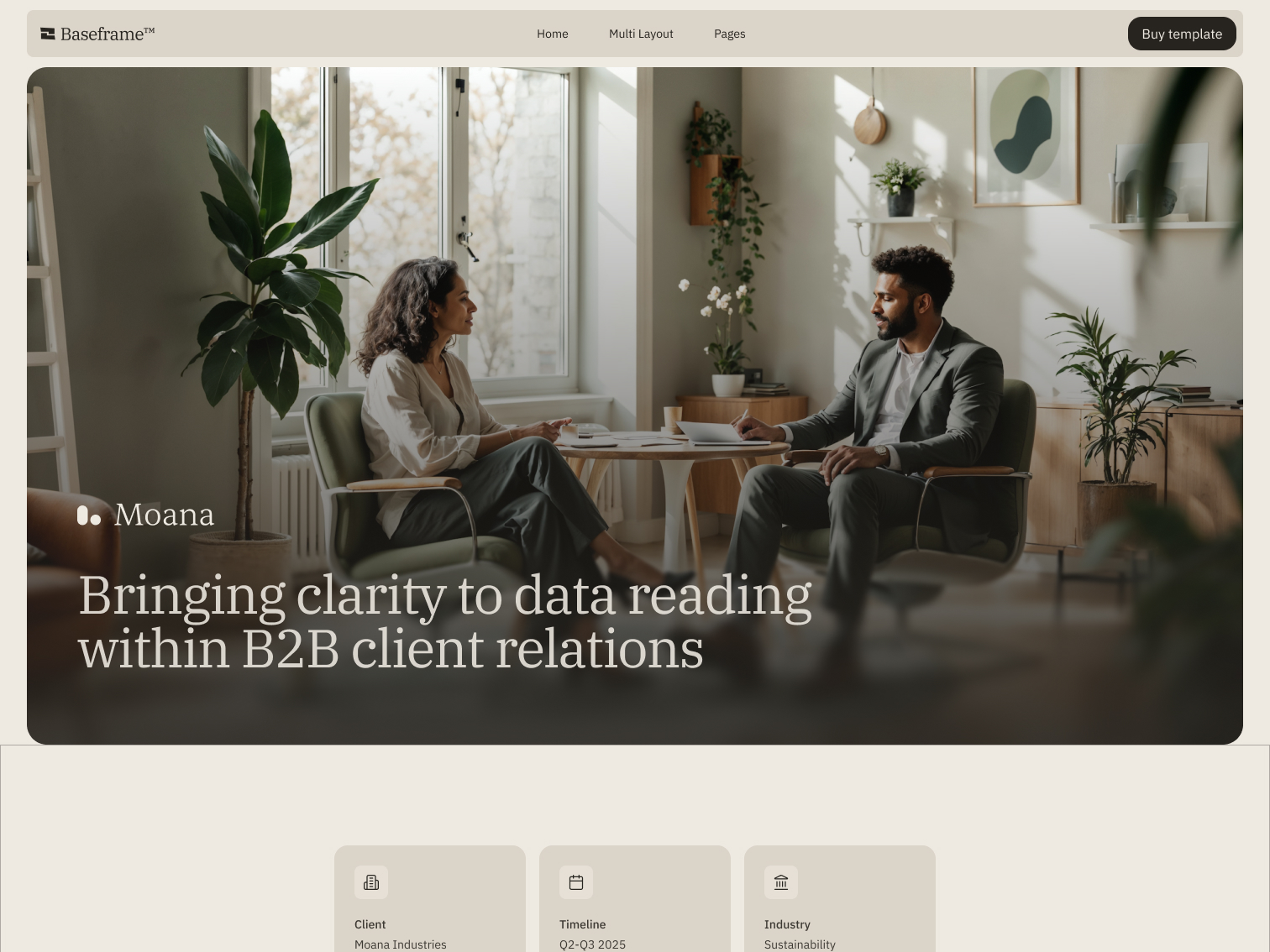




Simplifying strategic communication for teams
The first phase of the work focused on understanding how Moana was currently operating.
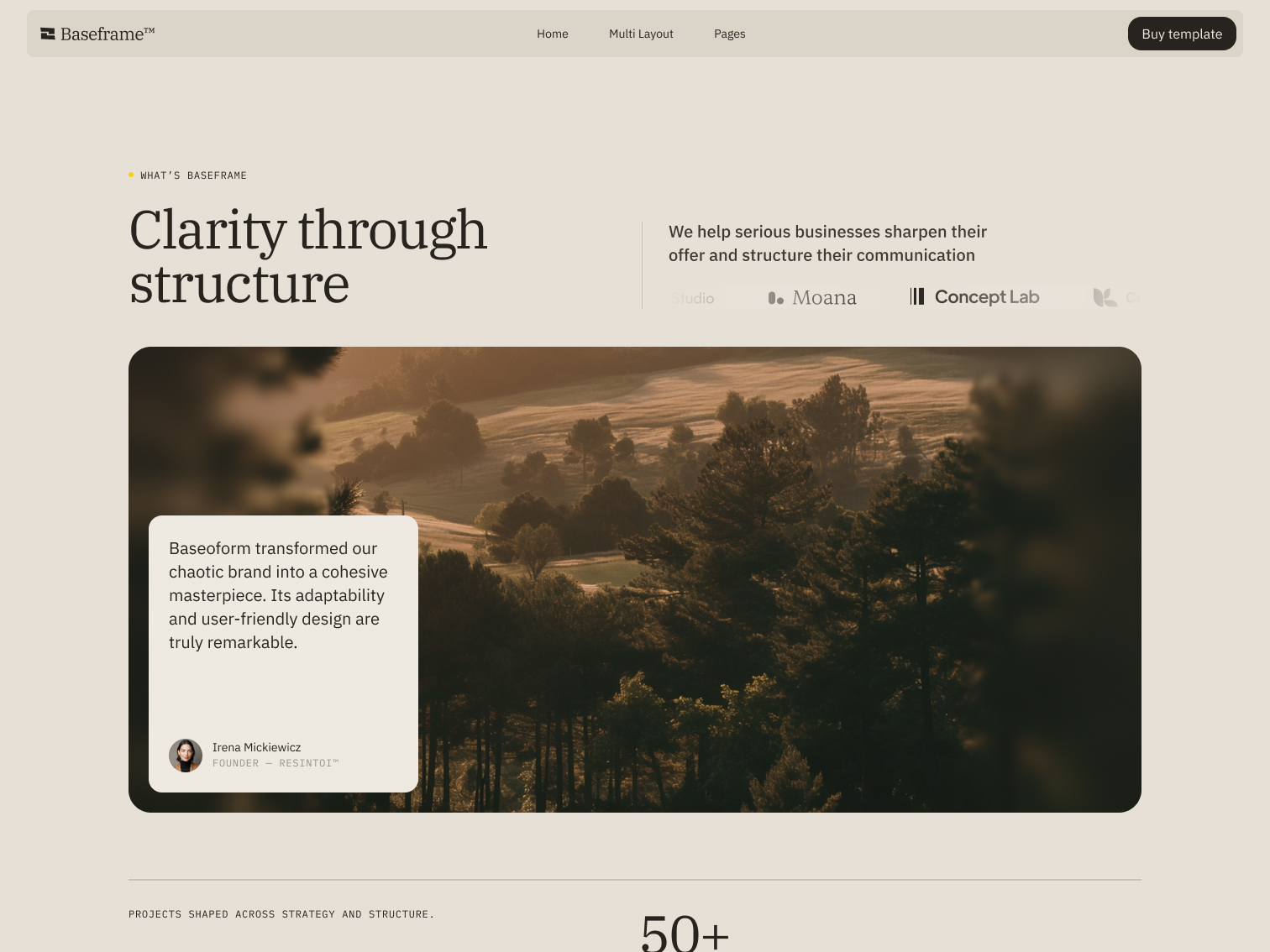
Moana approached Baseframe at a moment of transition. The company had grown steadily over time, expanding its offering, team, and internal processes, but much of that growth had happened organically. While the fundamentals were strong, the overall structure no longer reflected how the business actually worked.
What once felt intuitive had become difficult to explain. Internally, priorities competed for attention. Externally, the message lacked a clear frame. The challenge wasn’t direction, but alignment.
The first phase of the work focused on understanding how Moana was currently operating. Rather than jumping to solutions, time was spent mapping what already existed — decisions, assumptions, language, and patterns that had formed over time.

50+
90%
The process of understanding structures - rather than reports
This process revealed that complexity hadn’t come from ambition, but from accumulation. New layers had been added without revisiting the original structure. As a result, important ideas were present, but not clearly connected.
One of the key outcomes of the engagement was a shared understanding of what truly mattered. Not everything needed to be fixed or redefined. Instead, the focus shifted to identifying a small number of core priorities and building a framework around them.
This reframing helped reduce internal friction. Decisions became easier to evaluate. Conversations became more focused. The structure didn’t limit flexibility — it created space for it. Rather than adding more strategy, the work centered on subtraction.



The process of understanding structures - rather than reports
This process revealed that complexity hadn’t come from ambition, but from accumulation. New layers had been added without revisiting the original structure. As a result, important ideas were present, but not clearly connected.
One of the key outcomes of the engagement was a shared understanding of what truly mattered. Not everything needed to be fixed or redefined. Instead, the focus shifted to identifying a small number of core priorities and building a framework around them.
This reframing helped reduce internal friction. Decisions became easier to evaluate. Conversations became more focused. The structure didn’t limit flexibility — it created space for it. Rather than adding more strategy, the work centered on subtraction.


Explore other case studies